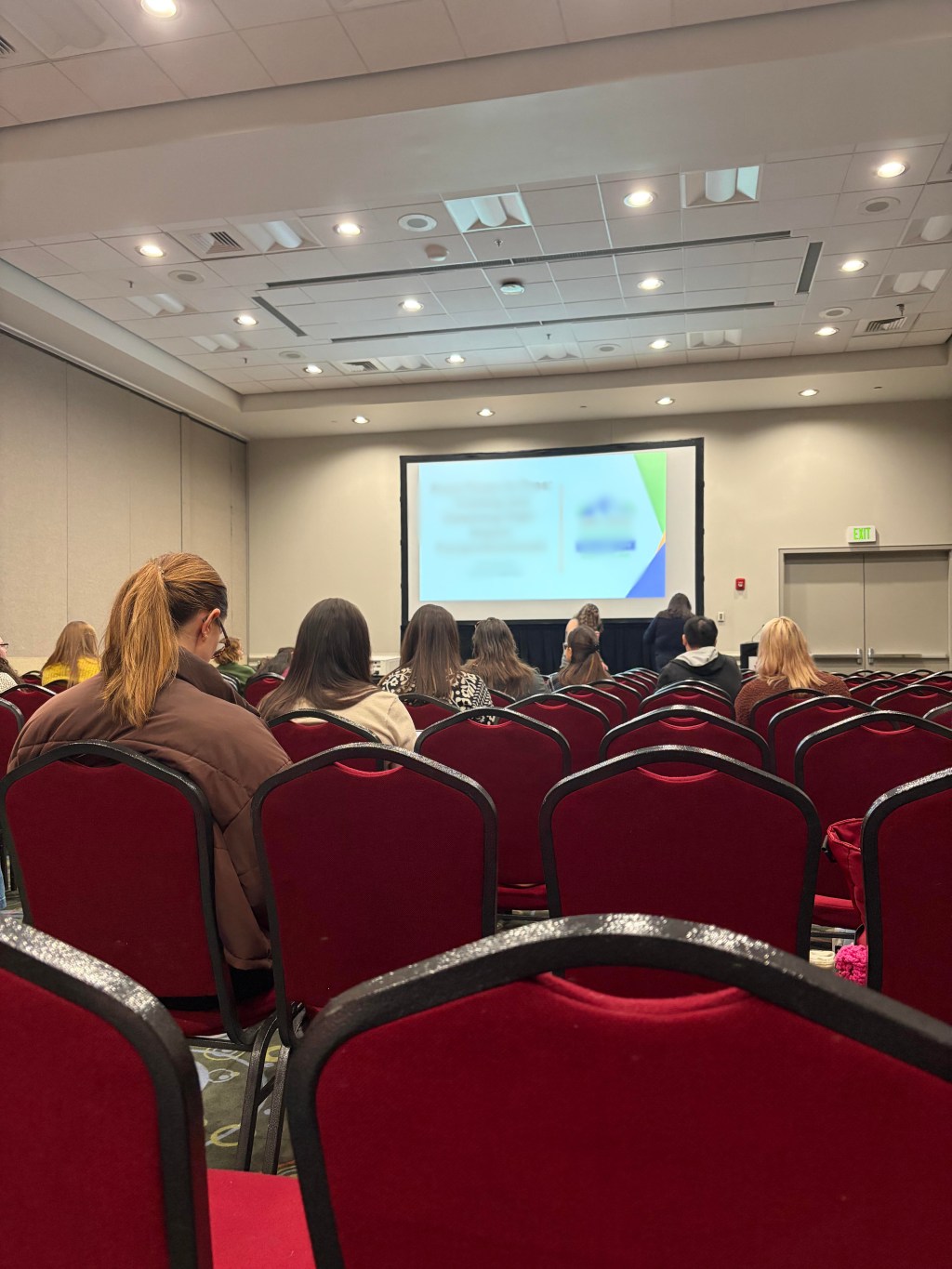
If you haven’t already figured it out, I am an elementary education major and I got to go to a conference for professionals in the special education field. It was such an incredible experience and I learned a lot of valuable and useful information even though that is not necessarily the field I’m going into. Myself and two peers were one of, if not, the youngest ones there but I can geek out about this subject so I was SAT and STILL.
However, one thing that really caught my surprise was the amount of AI resources and advocacy that was being presented to me. There were so many booths advertising AI resources, presentations that mentioned AI and it was totally unexpected. Here’s the summary of it:
The Pros of AI in Education: It does the nitty gritty work that teachers “didn’t sign up for”
Most of the time, the AI was never doing any of the teaching or bonding. It was doing the paperwork, organizing the due dates, etc. Which in some ways, yes – that does make their lives easier. With all the prepping and lesson planning teachers already have to do, having a little helper in your back pocket can take some weight off their chest.
It wasn’t so much that AI was replacing teachers but acting as more of an assistant with the administrative, behind the scenes tasks.
The Cons of AI in Education: A barrier to human connection
Aside from the obvious environmental damages AI causes, in specifically the education field, AI gets in the way of relationship building.
In one case, a resource was advertising AI in helping create the IEPs for their student. For those who don’t know, an IEP is an Individualized Education Program which is a document laying out any and all accommodations and services a student may need, along with outline academic goals for them to meet.
If an educator uses AI to complete an IEP, it can decrease their own understanding of their student. Though I am sure most educators would not use AI to complete an IEP entirely, there would still be parts that were inspired by AI that AI has no evidence or background knowledge of a student to base its conclusion from.
In another case, AI was being used in a resource to give feedback to parents as it analyzed a video of them reading aloud to their child. The AI explained what was done well and what needs to be worked on.
This creates a barrier in the educator-parent relationship that is deeply important in an early student’s life. Not only that, but the accuracy rate of this AI program was 70% and the presenter claimed “If we got it up to 80% accuracy, that would be phenomenal.” In regards to a child’s education, especially students with learning disabilities, 80% is not good enough, let alone 70%.
All in all, I understand that the creators of these resources don’t mean harm and in fact, understand that teachers and educators have far too much on their plate, however, there are less environmentally damaging and relationship taxing ways to give teachers a supporting hand.
Peace & Love,
Krys K


 The Glossed Over Blog
Leave a comment